What does consent mean in practice?

A ‘lived experience’ perspective

This blog was first published by Mad in the UK https://www.madintheuk.com/2025/05/issues-of-consent/ on 15/05/25

It follows some of the issues raised in my recently published memoir ‘Unshackled Mind; a doctor’s story of trauma, liberation & healing’. 

Apparently, I consented to ECT. Apparently, I consented to psychosurgery, when I had part of my brain ablated in 2001; the operation was called a ‘bilateral anterior cingulotomy’. When I came to challenge this, I was told that my consent was valid because I should have known exactly what was going on as a qualified doctor. As a result, I have no legal comeback to any of these procedures.

But I disagree. After all, I had been sold a bunch of lies. I had been told repeatedly over several years, that I was suffering from a brain disorder – variously described as a chemical imbalance or ‘something structural’ which had apparently caused me to have ‘treatment resistant depression’. I was influenced by the hierarchy, the consultants and professors who knew better than me…….after all, I was just a junior doctor, a mother with children. I was just a woman and I had not completed years of postgraduate training or researched all the papers – how was I to know?

On each and every occasion that I agreed to any sort of ‘treatment’, I was told that it would make me better more quickly, and more often than not, was necessary to save my life. I wanted to get better, of course I did. And throughout these years as a psychiatric patient, I was prescribed a cocktail of drugs which I took religiously at first. Why? Because they told me they were vital and if I stopped them, I would get worse.

I was in such a state of internal agitation and yet my world didn’t feel real, a strange inability to show emotion, a horrible feeling of being locked in by the numbness and so sedated that even reading, and every physical movement felt effortful. I now believe it was the effects of these drugs that led to this state of tortured misery, and all the while my thoughts were caught up in petrifying, paralysing cycles of negativity. I was terrified, utterly terrified that what I was experiencing could get worse than the torture I was already experiencing. So of course I couldn’t stop the drugs.

There came a time when I tried to rebel. Tired of the treatments, tired of living in the nightmare, I resisted admission to hospital, but I was in the psychiatrists’ thrall, they controlled me and then I had no choice – I was sectioned, detained – legally I had to be injected with depots, I had to take the drugs. I was watched to make sure that I swallowed the mixture of pills and capsules. But to be honest, I wouldn’t have resisted taking the drugs, because I was so frightened by the psychiatrists’ narrative – that I would go further downhill if I stopped them. The terror was so real. I find it hard to explain just how scared I felt.

If this wasn’t bad enough, I was being bullied -some of the nursing staff kept telling me that the reason I didn’t get better was because I ‘didn’t want to get better’………..They said, I wanted to be in hospital. Why would I want to be held captive, away from my family, with others who were also in various states of agitation and distress? None of it made sense.

It felt like I was back at boarding school, and once I was legally captive within their hospitals, it felt as though I was on trial.  I had to prove to them that I wanted to get better and I had to do everything that was suggested and advised by my expert psychiatrists. I was doing my best to be a compliant patient, but life was hell. Life was a nightmare and whatever I agreed to, just made everything worse, but they insisted it was my broken brain that was the problem. These psychiatrists never, ever questioned their part in it, their treatments, their drugs, their attitudes……….No, my failure to recover was all down to me – my faulty brain, my weakness, my vulnerability.

To ensure that I ‘freely consented’ to the psychosurgery – which they called  NSMD (Neurosurgery for Mental Disorder), a fancy name to try and distance it from the old-fashioned lobotomies – I had to be interviewed by an independent ‘committee’. A committee who read my notes and talked to the hospital staff before they talked to me. The psychiatrist in charge primed me before I saw them– it was made very clear, that if I did not ‘freely consent’ then I could not have this surgical intervention which was my LAST chance of gaining a partial recovery. It was the ‘LAST resort treatment’ and I was told that if I continued the drug regime and had CBT after the surgery, I might – just might, get to live at home again. By then I was permanently sectioned and had been in hospital for over a year. At the same time, the committee were told that if I did not have this surgery, I would very likely die.

My consent was so freely given that I couldn’t even remember what had been done to me after the surgery.

Yet it had already been shown that I was in such a state prior to the surgery, that when my cognitive function was formerly tested, the result was that my performance was in the bottom 10% of what was expected.  Not to mention that my memory was shot to pieces by the ECT, some of which was given to me without my consent, under a section of the mental health act. Moreover, through the sedation and other effects on my brain function caused by the cocktail of drugs……….I was certainly not in my right mind that is for sure!

So, of course the psychiatrists had my life under their control. They made decisions, I merely said I understood and signed my name. They deny coercion, but how can that be the case, when I had been lied to? There was no truth in any of their assertions. I did not have any brain disease. I was being poisoned by their drugs, my brain was regularly being damaged by maintenance ECT and the night before the operation, a junior doctor came to ask me to sign the consent form. The following day I had two pea sized portions of my brain deliberately destroyed all because I thought they were telling me the truth. No, not all because of that – I also agreed because I was so utterly miserable that I thought I owed it to my family to be seen to have tried everything – they never asked me about that. I had decided that after the surgery, I would find a way to take my life. I was determined that this time I would succeed.

I know I’m lucky to have survived it all. I’m lucky because after all these assaults on my brain, things could be a lot worse. I’m amazed at the human body’s resilience. It’s perfectly possible that I may yet, have more physical problems as a direct consequence of what they did to me. I know that now’s the time to be grateful for the life I have, and I must make the best of the unknown time I have left.

But what they did to me, has had profound repercussions – not only was my life ruined but by extension, it ruined the lives of my family too. They didn’t consent to what happened to me. None of us did. And none of this was necessary.

If only I could turn the clock back. If only I had followed my gut instinct and said ‘NO’ to the first antidepressant, and the second……None of this would have happened. I would never have become agitated, sleepless, desperate, suicidal. I would never have been admitted to a psychiatric hospital, given ECT and ended up on the cocktail of drugs which rapidly then became a continuous pattern only differing in where I would end up and what drugs I would be prescribed. But, at that time, there was no discussion about the harms of psychiatric drugs – and today in 2025, antidepressants are still being labelled as ‘safe and effective’.

What a disaster. But they are not sorry. They are not willing to listen to my side of the story. They still think they know best as they repeat their errors using human beings with lives and families as their victims and their guinea pigs. These arrogant, dangerous fools whose interests lie in further propagating their falsehoods, trying to convince the world of their wisdom. I believe they will be found out, and I hope it’s sooner rather than later as more and more of us speak out. We, the survivors, who despite them, summon up our courage to speak from the heart as we mourn the many for whom it is too late. Some died by suicide, and we are told that it was a result of their ‘illness’, others are recorded as deaths by ‘misadventure’, still others suffer the catastrophic metabolic effects of the drugs, and their premature deaths are said to be ‘natural’– what a joke. They died as a result of toxic manipulation of their normal brain chemistry by drugs, prescribed by doctors. This is not natural, nor is it suicide, surely this is state sanctioned murder.

Part one Out & About- Growing the movement for radical change

First published on Mad in the UK on 28/10/24


It has been a delight to take up opportunities to gather in person at various events this year, particularly after the restrictions imposed by the pandemic. There are various networks of like-minded individuals which have grown up around the country, and around the world, who are determined to improve the care of people who have all too frequently been given the familiar labels of psychiatric diagnoses. Sometimes the focus of these groups is to take an ‘activist’ stance, or it may be a particular way of helping people but the unifying factor is that we all know that the traditional bio-medical model of psychiatry is not fit for purpose.

In September, I had a wonderful day at the AD4E live gathering in Pershore, and met allies who I had seen write or maybe I had heard speak on the many virtual meetings. It has also wetted my appetite for the upcoming AD4E festival on November 8th. There are so many sources of inspiration.

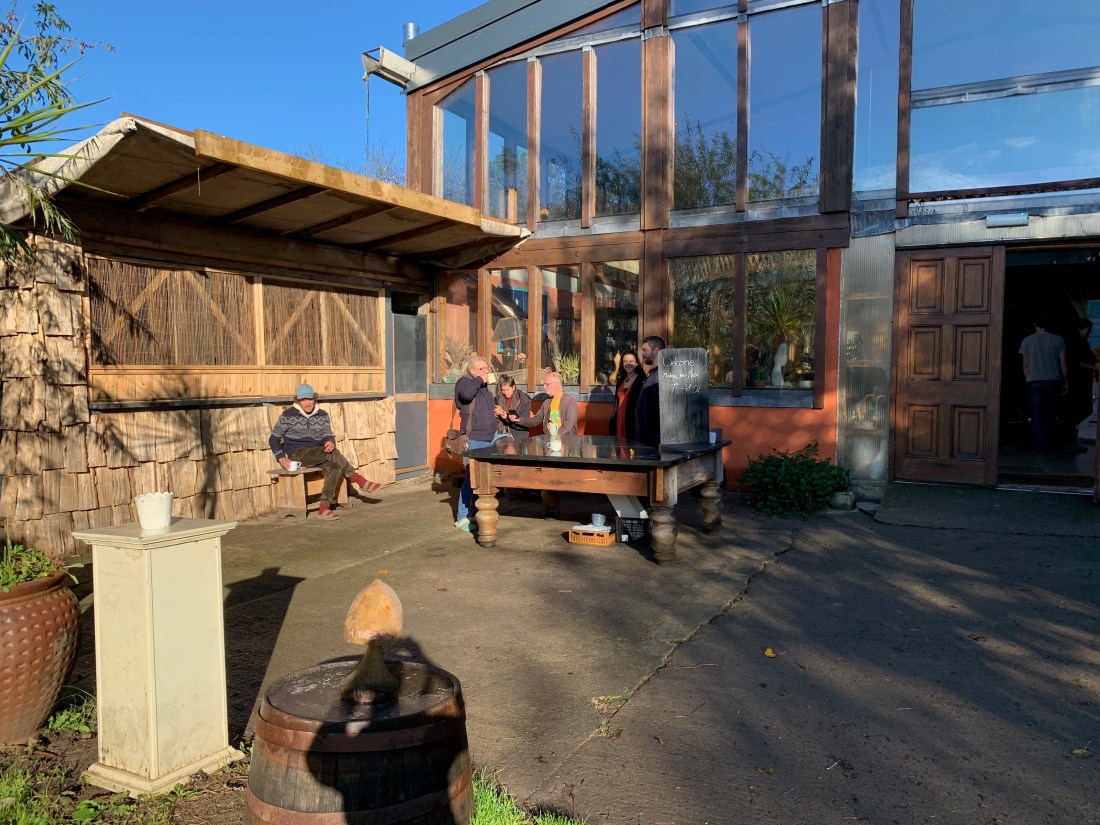
Then in early October, I went to ‘Making New Maps’, my second retreat with Compassionate Mental Health. I hadn’t been to Coed Hills Rural Art space before and it was truly beautiful. The centre is run by a community of individuals who live on-site, in a low impact way, grow food and explore creative expression through the arts and a relationship with the environment; it was just the right sort of venue for this gathering.

‘Compassionate Mental Health’ work with a network of people across the UK and internationally to transform mental health services, and radically change the way we talk about and treat ‘mental illness’. Once again, I found myself meeting people who are part of a growing worldwide movement calling for a more holistic approach.

The power of community is so well demonstrated in groups like these, where any status conferred by a job or position in society is left behind and together we can just be ourselves for who we are and not what we do. While there may be a variety of speakers and facilitators, all prepared to share their wisdom at these events, nonetheless, it remains important that there is no ‘them and us’. I was not disappointed that this retreat was no exception, and we were encouraged to eat together and sit together in the common areas.

It was fascinating to find out about the formal research which is looking at the principles of ‘Soteria’ houses and the funding that has made this possible here in the UK. It was also very interesting to meet representatives from PsyCare UK, and to discover that they have over 1000 volunteers all over the country who provide a safe and supportive environment mainly at festivals, so that individuals can navigate through difficult experiences. How inspiring it was to hear some of their stories.

Whenever I attend these sorts of gatherings, I am always impressed when I meet people and/or the families of those who have experienced what is commonly referred to as ‘treatment’ given by the current mental health services. For many former or current patients, it’s not necessary to give all the detail of exactly what has happened, when there is a common agreement that our experiences could have been better.

For many of us, this has led to our desire to withdraw from traditional psychiatric services, and some of us can give testimony to the recovery that followed.  But we are mindful that this is not always the case and it is important for everyone at every stage of their lives, to be accepted and cared for, in whatever situation and circumstances they are in right now, in the present moment.

Yet, the purpose of meeting was not to denigrate those working in health services – not at all. As it happens, there were some very dedicated NHS staff at the Coed Hills retreat, who were also passionate to improve services for those who seek their help.  Instead, there was universal agreement that there are alternative ways to approach our diversity of need.

Hearing stories from other participants always brings gatherings like this alive. So many had been through agonising times either themselves or with their loved ones. The compassion, love and empathy were tangible when people so courageously shared heart-wrenching accounts of their lives and experiences. We were aware too of the tragedies, the bereavements of people who have died too soon because their pain had been unbearable. Our hearts were touched, and we grieved for the loss of close family members to suicide, many of whom were far too young to go. Yet it was so apparent how the families had turned the bitterness of their loss into impassioned desire to help others and to prevent such tragedies from happening to other people, without in any way diminishing the grief that would be with them for as long as they lived.

People were truly inspiring. Courageous in sharing the depths of their despair, not afraid of their vulnerabilities. The collective talent was awesome, many poets, musicians, artists and creatives, all who in their own way were using these gifts to express or enhance the value of their lived experiences.

Someone said they didn’t like the term ‘survivor’ because it conferred another label on us. Perhaps they’re right in that it gives us another reason to be ‘othered’. But such disagreements on the use of language must never divide our united intention, to make life better for those who suffer the unseen pain of deep emotional or mental distress.

Serious violence and violations had been acted out on many of us as children, while others were ignored, bullied and emotionally neglected. our basic needs going unmet. We recognise our own traumas whether society chooses to recognise abuse, neglect or not -and all too often what happened in early life led to the difficulties which plagued us later life. Whichever way those harms chose to manifest hardly mattered.  Whether our mood was high or low, or fluctuating in between, whether we were excessively anxious or hallucinating – hearing voices or seeing things which others cannot see – whether we acted out against ourselves or others in our despair. We discover that we are not in fact uniquely flawed, and in some cultures, our experiences may be revered, and we might be sought after as shamans and mystics.

As we sat together, united with our desire to do good as we would have done to ourselves, we also learnt to empower one another and enable the choices so many of us desire in this important realm of caring for our emotional, mental or spiritual needs.  I left with renewed ability to respect the sanctity of our spiritual or religious beliefs. knowing that there is no certainty about such things.

This was indeed a gathering of like-minded people who are passionate to improve the care of those who are emotionally or mentally distressed or disturbed, whether they have been given a formal ‘psychiatric diagnosis’ by healthcare professionals or not. There will never be a ‘one size fits all’ approach, just as there never will be a pill that can fix life’s problems.  But here we came together to learn and explore different ways in which we can all be empowered to live our best lives with whatever assets and constraints we are carrying at the current time.

Whenever I leave a gathering like this having dipped once more into life’s richness, I reflect on how little I can do as just one person. It is true none of us can do this alone, but together with our new connections, perhaps the dream can move further down the road as we follow new maps to the provision of good, holistic, compassionate care for all who need it.

Doctors Are Not Trained to Think Critically

https://www.madinamerica.com/2024/06/doctors-are-not-trained-to-think-critically/

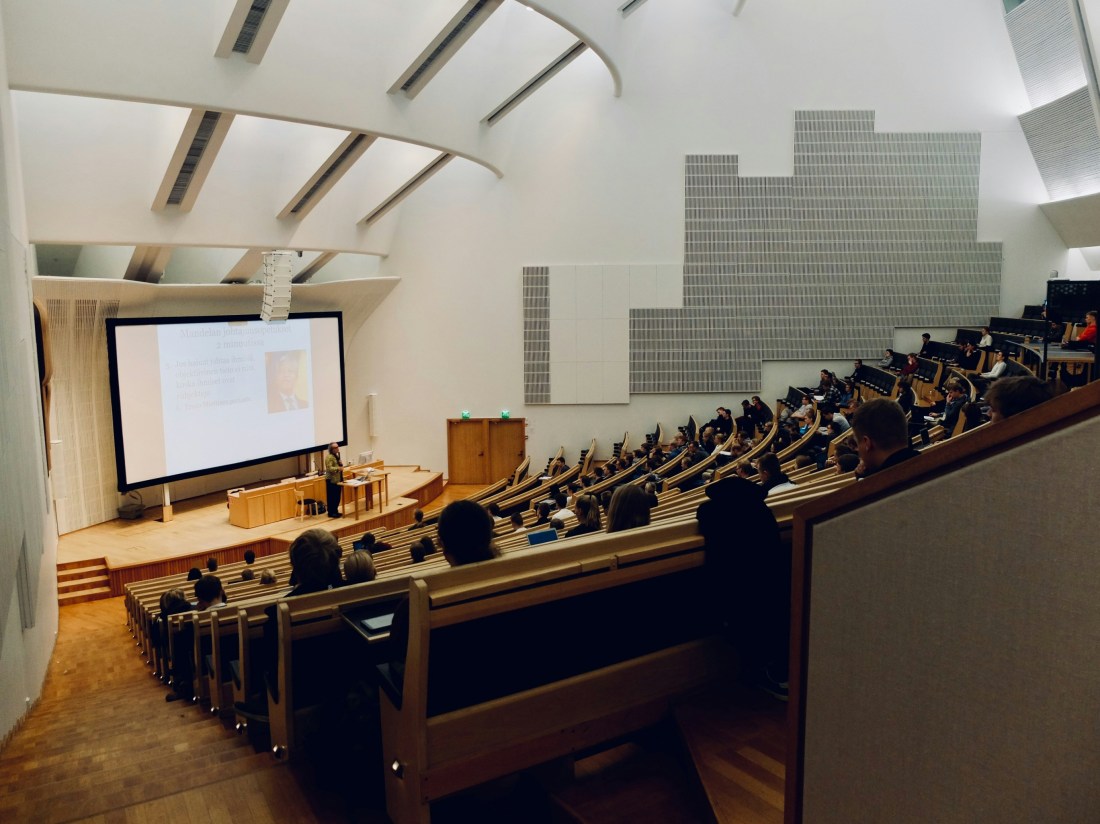
I went to medical school in 1977. I was still only 17 years old but it was a great relief after the horrendous years I had spent at an all-girls boarding school. My fellow students and I started our first year ‘pre-clinical’ training with 4 ½ days a week of lectures. We were expected to assimilate a massive amount of information and then to regurgitate it during the end of the year exams. Those who failed would have one chance to re-sit and if unsuccessful, they would have to leave medical school.

University students are expected to be inquisitive, to ask questions, but at medical school, it was the other way round. Medical students were expected to answer questions correctly to the lecturer or teacher’s satisfaction.

I already felt disadvantaged; one of the lecturers had broadcast that any student who did not have ‘A’ level Physics should not have been granted a place at medical school. I was one of those students. I had done Maths ‘A’ level instead. My school didn’t do physics or chemistry and I had had to cycle to a neighbouring school just to get the mandatory ‘A’ level Chemistry lessons.

I clearly remember the time when I dared to pose a question during one of our lectures: We were learning about asthma, and I asked why it was that I suffered from wheezing after a thunderstorm but at no other time.

“Impossible,” said the lecturer, “grass pollen is the wrong size and cannot provoke any kind of allergic reaction in the bronchioles (small airways in the lungs).”

I felt humiliated—he had just denied my experience in front of 80 students.

It was many years later that I discovered that doctors had observed this phenomenon on a regular basis. It is now understood that aerosolization of pollen in thunder storms can indeed provoke dangerous asthma attacks for hay fever sufferers like me.

This was just one small example of how humiliation of medical students was routine. By the time we got to our clinical studies and spent most of our time rotating around the various specialities in the local hospitals, we were well used to being subjected to belittling treatment at the hands of our superiors. The ward round was a time when the consultant showed his (rarely her in those days) colours. It was not enough to dominate their junior doctors; terrorising medical students was a daily occurrence. We would be quizzed over a patient’s condition and if we failed to give a satisfactory answer, then making personal and derogatory comments to our detriment was considered fair game.

I was not looking forward to my psychiatry rotation. The prospect of spending time in the large institution, Springfield Psychiatric Hospital in Tooting, was scary. Medical students were tasked with presenting written cases on a variety of patients, finding examples to illustrate the most common psychiatric diagnoses. I surprised myself at how much I enjoyed the experience of interviewing these interesting patients. I felt privileged to have the time to sit and listen to the reasons why they were in hospital and discover more about their background and circumstances. I did well and was awarded an ‘A’ grade for my efforts.

However, I wanted to be a surgeon, so my interests lay elsewhere. As it happened my life took an unexpected turn when I became pregnant. I had no maternity leave and had no family help. By the end of the training, when I finally qualified as a doctor, I was exhausted. I was told that my decision not to go straight into work as a junior doctor was tantamount to career suicide, but I wanted to give our little daughter the best chance in life by looking after her myself.

I didn’t start work as a junior doctor until 8 years and 3 additional children later. My husband and I role swapped to enable me to work the grueling 80-100 hours a week required to get my full registration as a doctor. My intention was to become a GP, but just before I reached that goal, I was side-lined into postgraduate training to become an A&E consultant.

At that time, there were only a few brave patients who came to A&E following overdoses, and it was very rare to see any other manifestations of self-harm. The medical profession expressed a global disdain towards these individuals; those diagnosed with a mental health condition were highly stigmatised and considered weak or defective characters.

Admittedly I was tired out. I had been present during some very distressing resuscitation attempts of young children and the memories of my awful, traumatic experience of boarding school had just surfaced. I knew the reasons why I was having an emotional crisis and I went to my GP for help. The GP left little room for discussion before telling me I was depressed. I left the GP surgery feeling utterly bewildered and wondered how on earth a pill like Prozac was going to fix my problems. But I was a doctor and conditioned to believe that the experts knew best. The GP must be right.

I took the Prozac for a while, but it just gave me side effects, so I stopped it. I had no idea that stopping antidepressants precipitously was not a good idea. I had been told they were not addictive and had very few side effects.

My circumstances didn’t change, and I was still very tired, very stressed and feeling unhappy. I became increasingly anxious about the responsibility of treating very sick patients with minimal support from more experienced doctors. When I went back to the GP, I was signed off sick and told I must take the antidepressants and the dose was increased.

At home, alone, with no-one to talk to, things went downhill rapidly. I loved my husband but genuinely didn’t want to burden him with what I felt were unreasonable concerns. After all my profession told me I should be able to cope, and the GP had assured me these pills would soon make me better. I just had to wait it out. But I just kept feeling worse. I couldn’t sleep, I felt agitated, my thoughts were going round and round and then I became suicidal. Being suicidal made no sense. I had a loving husband, four beautiful children. I had a job. There was no reason to want to die.

Nobody understood that suicidal thoughts could be caused by the very drugs which are used to treat depression. When I shared my thoughts with a doctor friend, she was alarmed. I was taken to an emergency appointment at the GP, then an emergency appointment at the department of psychiatry and my husband was told I must be admitted straight away.

That was just the start of the seven-year fiasco, where I was continuously treated with a changing cocktail of psychiatric drugs and multiple ECT treatments. I never improved, instead slowly became worse and worse, as a revolving door patient.

I was given psychotherapy all through this time, but the therapists were not impressed by my accounts of childhood trauma. Apparently, nothing I told them was sufficient to cause the state I found myself in. Nobody considered that the treatment I was having could possibly be detrimental in any way. Nobody understood that the drugs I was taking could be responsible for my deterioration. Instead, I was told that my brain was disordered, that I had a chemical imbalance, and I was seriously ill.

When I started to act out on my suicidal thoughts, self-harming to the extent that my life was in danger, I was sectioned and, in the sixth year, admitted to the secure ward and placed under continual observation. The prognosis was so grim that I was offered psychosurgery. I was desperate to get better. I wanted to be normal, live at home and be a mother to my children. I agreed to the surgery, not really knowing what else to do.

At the point of the psychosurgery, the psychiatrists reduced the cocktail of five drugs at extremely high doses down to two drugs at lesser doses. When I made a spectacular recovery, even the psychiatrists thought it was miraculous. But they could not credit the psychosurgery as responsible for what happened when the ‘light switched on in my head’, nor was the reduction in the number and doses of drugs I was taking ever considered to have any bearing on my recovery.

Eventually I was discharged from the hospital, and I started to take myself off the remaining doses of antidepressants against the wishes of the psychiatrists. When I reported brain zaps, the psychiatrist had no idea what to suggest, other than reduce the dose slowly.

But I was only drug free for a couple of years. During this time, I even managed to get back to work and I was writing my memoir, going through my medical notes to glean the necessary information. The psychiatrist was worried when I reported that I wasn’t sleeping well. He convinced me that this was a sign that the depression was returning. What he said scared me so much that I capitulated and went back on antidepressants.

When my book was published in 2006, I was doing ok, but it didn’t last long. Within a year, I was back to being depressed and suicidal. I felt a terrible fraud having told the world about my successful psychiatric treatment. Once again, I was admitted, this time given ECT. This time, when I was discharged, I was told I must take high dose antidepressants for life. I was also told that I would never fully recover and suffer recurrent relapses. I was therefore advised to avoid all stress and that meant I should never work as a doctor again.

When we moved away and my husband started his training to become a counsellor, I started to hear a different story to the one that I had been taught as a doctor and different to what had dominated my life as a psychiatric patient. I had believed the psychiatrists when they told me I had a very biological depression caused by a chemical imbalance or some kind of as-yet-unidentified brain disorder. In addition to being told that my only hope was to take antidepressants, I was also advised that having any further psychotherapy which went over the events of the past was pointless, and would only serve to further destabilise my precarious remission.

But each day my husband came home from his training and started to drip feed me with alternative ways of looking at things. Maybe feeling stressed and unhappy was a normal response to terrible circumstances. Maybe believing that those supposedly negative emotions were abnormal fed the downward spiral. Maybe hearing society reinforce a message that you should be happy all the time while experiencing the stigma from my profession made it all worse. When the psychiatrist told me time and time again that I was ill and would never recover, maybe it had become a self-fulfilling prophesy.

But could these experts really be wrong? After all, they were highly trained, highly skilled doctors involved in research. Surely while these eminent professors of psychiatry said that I was one of the worst cases they had ever treated, there was no way I could have just been a normal person reacting in a normal way to difficult circumstances. Could I?

When I weaned myself off the sedating antipsychotic drug which had been added to the cocktail of high-dose antidepressants, I felt a lot better. The psychiatrist was not happy. He warned me. If I was to stop any more of my drugs, I might once again find myself back in hospital with a relapse.

When I tentatively started to return to work as a doctor—very part time at first—I was fine.

By 2016, I had seriously started to doubt that suffering awful side effects from taking off-licence high doses of two antidepressants was worth my while. Slowly I started to reduce the doses and I was fine. While I became more confident in the robustness of my recovery, I still remained ignorant about withdrawal. If only I had searched online, I would have known better.

Likewise, I was ignorant that other people who had also been sent away to boarding school as young children also suffered severe consequences as adults. If only I had searched online, I would have discovered these important facts earlier in my life. As it was, left in ignorance, I believed that I was somehow uniquely weak, uniquely flawed and terribly, terribly ill just like the psychiatrists had told me.

I didn’t want to tell doctors about my symptoms during withdrawal. I had no desire to draw attention to what I was doing, and risk being re-diagnosed or medicated again. By trial and error, I discovered that reducing the dose of the psychiatric drugs had to be very, very slow. It wasn’t scientific but I found myself cutting tiny slivers off the tablets and carrying them around with me, to make sure I could take a tiny amount when the feelings like electric shocks became too much. I had to reinstate the other drug when I found the rebound insomnia, the restless legs, the cramps intolerable. But my emotions were alive. I was living in three dimensions after years of feeling like the world was unreal and that I was completely numb. I cried and cried, but I also laughed and felt joy. It was incredibly scary at times, when I felt panic stricken and afraid. Occasionally I had suicidal thoughts, but somehow, I knew they would pass.

One day, it was like the penny dropped and I laughed out loud when I realised that I had been prescribed medication to treat my psychiatrists’ anxieties. They should have been the ones taking my pills.

I found a counsellor and talked over what had happened to me as a child at boarding school. She was amazed. How on earth had nobody taken this seriously all those years ago? I had been through hell back then, and it had been re-enacted by the psychiatric system which re-traumatised me every time I was admitted to hospital. At last, I started to process memories and emotions that had remained suppressed for decades. I had to learn to recognise my survival persona, one who was easily controlled and coerced. One who knew only how to drive herself harder in response to difficulty. I had to meet my inner children and give them the love and comfort which they had been deprived of while I was growing up.

I made a grave error when I decided to go cold turkey on one of the antidepressants – within two days I had severe burning pain and to this day, I still have the symptoms of small fibre neuropathy. I haven’t slept through the night since that time and now I know that these symptoms are very likely manifestations of a protracted withdrawal syndrome.

In the last few years, I have met two educators in different parts of the country. Both were involved in teaching medical students and/or doctors. Neither of them were medical themselves but both qualified teachers and had the academic credentials to be recognised as experts in education. One of them was employed by a medical school, but suddenly their expertise was no longer required to teach ‘problem-based learning’. The other person was also ousted from their role. They are happy to speculate that this is because the students had learned how to apply their critical thinking too effectively. They were becoming bold, asking awkward questions, no longer willing to learn by rote.

Medical research is largely funded by the pharmaceutical industry, papers ghostwritten by the pharmaceutical industry and influencers paid by the pharmaceutical industry. Regulators are not independent either and so it is that most doctors have become pawns in a system, used to deliver the drugs which provide the fundholders with the maximum profit. So far, the system has failed to eliminate corruption and bias, for one reason only, that is there is no such thing as a free lunch.

Most doctors are not capable of critically appraising the research and ‘evidence’ is sold to us as ‘gospel’. Doctors lack time and training, and are part of a historical, culture which trusts in the academic expertise of influential colleagues. My own medical training had simply reinforced the myth that expert doctors knew best. I had denied my own personhood, ignored my gut instincts and succumbed to the traditional biomedical psychiatric paradigm.

There could have been a quicker route to reach the same conclusions as I have now. There was no need for me to have done this alone; there are plenty of other voices out there, plenty of people who can guide the way.

We might think we choose what we believe but it very much depends on what information is fed to us and importantly, what is withheld. We live in a culture which is heavily influenced by social media and the advertising industry. We cannot rely on the medical profession to take the lead.

While some patients may find psychiatric drugs helpful, at the very least all patients need to be fully informed of the risks of potentially dangerous side effects, and the risks of withdrawal.

I am one of the lucky ones who survived, but others have lost their lives as a direct result of psychiatric drugs. I have written a sequel to my original memoir which reflects the turnaround in my thinking. Unshackled Mind will be published in the coming year. Please join me in speaking out, so that others may be spared from unnecessary suffering and life-threatening risks, all of which may follow an innocent request for help during an emotional crisis.

***

Photo by Dom Fou on Unsplash